
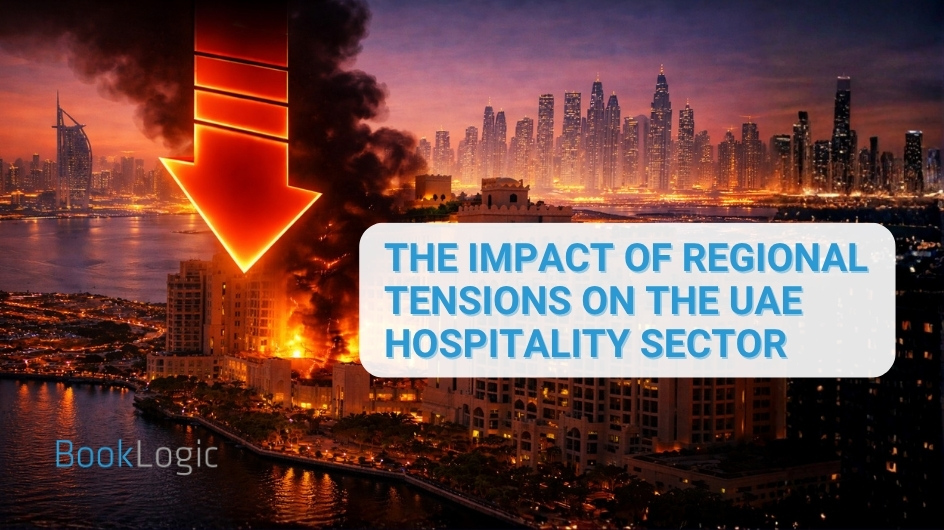
La industria global de la hospitalidad sirve como un intrincado proxy para la estabilidad regional y la salud geopolítica. En BookLogic, hemos realizado una extensa evaluación de rendimiento que involucra una muestra representativa de 100 propiedades hoteleras en los Emiratos Árabes Unidos (EAU), contrastando datos empíricos de marzo de 2025 con el período volátil de marzo de 2026. Nuestros hallazgos delinean un descenso precipitado en los indicadores clave de rendimiento (KPI), una tendencia que identificamos como una consecuencia directa del shock sistémico causado por el conflicto militar Irán-Estados Unidos y la inestabilidad regional resultante. Este informe examina la intersección de la guerra cinética, la psicología del consumidor y la erosión de los ingresos impulsados por el turismo.
Métricas de Rendimiento Cuantitativo y Contracción del Mercado
Nuestro análisis longitudinal identifica variaciones significativas año tras año (YoY) en los métricas operativas clave. Los datos sugieren que el sector ha pasado de un período de crecimiento récord a finales de 2025 a un estado de contracción defensiva:
| Indicador de Rendimiento | Variación (YoY) | Análisis de Tendencias |
| Reservas Confirmadas | 11.0% Disminución | Correlación Negativa |
| Índice de Cancelación | 110.0% Aumento | Alta Volatilidad |
| Ingresos Primarios (Brutos) | 38.0% Declive | Contracción Sustancial del Mercado |
| Ingresos Totales (Agregados) | 29.0% Caída | Suavización Económica Sistémica |
Análisis Causal: El Conflicto Irán-EE. UU. como Fuerza Mayor
Concluimos que la fuerte contracción en el rendimiento hotelero de los EAU es un subproducto inmediato de la escalada de hostilidades entre Irán y los Estados Unidos durante el primer trimestre de 2026. Este evento geopolítico funcionó como un shock no económico que efectivamente eludió los ciclos de mercado estacionales tradicionales y las elasticidades de precios.
1. La Erosión del Constructo de Lujo de “Refugio Seguro”
Durante décadas, los EAU han sido meticulosamente comercializados como un santuario dorado—un destino caracterizado por una seguridad absoluta. Sin embargo, como documenta The Guardian tras los ataques del 3 de marzo de 2026, esta imagen fue fundamentalmente desafiada. Cuando la actividad militar comenzó a invadir el perímetro “intocable” de los Emiratos, el impacto psicológico en el viajero de alto patrimonio neto (HNW) fue profundo. Nuestros datos indican que el 110% aumento en cancelaciones no fue meramente una reacción a obstáculos logísticos, sino una respuesta a la “imagen de seguridad destrozada.” Cuando las intercepciones de misiles se hicieron visibles sobre los distritos de ocio, la relación riesgo-recompensa para los turistas internacionales se volvió insostenible, lo que llevó a un éxodo inmediato de reservas actuales y futuras.
2. Parálisis de la Aviación y la Disrupción Global del Tránsito
El conflicto requirió la pausa de aviación más amplia en la región desde la pandemia de 2020. Con cierres intermitentes de importantes centros y el desvío táctico de transportistas globales lejos del Golfo Pérsico, los EAU enfrentaron un importante cuello de botella logístico. Euronews los informes sugieren que el Medio Oriente más amplio está actualmente presenciando un $40 mil millones de pérdida en el gasto de los visitantes. En nuestra evaluación interna, encontramos que incluso cuando los vuelos se reanudaron, se priorizaron para la repatriación y la logística de emergencia en lugar del turismo receptivo. Esta incapacidad física para llegar al destino contribuyó significativamente al 38% declive en los ingresos primarios, ya que el segmento internacional de alto rendimiento—que depende de una conectividad de larga distancia sin interrupciones—simplemente desapareció de la tubería de reservas.
El papel de la volatilidad de la información y las narrativas digitales
Una característica única de esta crisis de 2026 ha sido el papel de la transmisión digital en tiempo real. El estatus de los EAU como un centro de influencia global actuó como una espada de doble filo; aunque normalmente impulsa la demanda, también permitió que los primeros signos de conflicto se transmitieran a millones de manera instantánea. Imágenes virales de escaladas militares eludieron los filtros de los medios tradicionales, creando un "vacío de información" que fue rápidamente llenado por narrativas alarmistas. Hemos observado que esta volatilidad digital aceleró el ciclo de cancelaciones, convirtiendo un enfrentamiento regional en un disuasivo global en cuestión de horas. La consiguiente caída en la confianza del consumidor fue tan rápida que las herramientas de marketing hotelero tradicionales—como ventas flash o reprogramaciones flexibles—no lograron ganar tracción significativa.
Implicaciones macroeconómicas: compresión de ingresos y riesgos de Capex
La disparidad que identificamos entre la caída en los ingresos primarios (38%) y los ingresos totales (29%) indica que, aunque la demanda de noches de habitación fue diezmada, las fuentes de ingresos secundarias—apoyadas por residentes a largo plazo y un mercado doméstico resiliente, aunque más pequeño—proporcionaron un ligero colchón. Sin embargo, una caída agregada de 29% en los ingresos totales representa una contracción catastrófica para un sector que depende de un alto volumen y un alto ADR (Tarifa Diaria Promedio). Con el gasto de los visitantes internacionales en toda la región estimado en caer casi $600 millones por día, la presión sobre los márgenes operativos y la capacidad de los grupos hoteleros para atender su deuda o financiar gastos de capital (CapEx) para 2027 está bajo una presión extrema. Esto amenaza los objetivos estratégicos a largo plazo de la visión de diversificación turística de los EAU, que requiere un crecimiento consistente y de alto rendimiento para seguir siendo viable.
Evaluación estratégica y perspectivas
Los datos sintetizados en BookLogic subrayan que el EAU sector de la hospitalidad está actualmente navegando su "prueba de estrés" más significativa de la década. Identificamos la guerra Irán-EE. UU. como el único catalizador primario de esta inestabilidad, anulando las trayectorias de crecimiento establecidas. Nuestra evaluación sugiere que, aunque la infraestructura física de los EAU sigue siendo de clase mundial e intacta, el "activo intangible" de la paz regional percibida ha sido dañado.
Una recuperación sostenida seguirá dependiendo de tres factores:
- Desescalada: Un cese de hostilidades verificable y duradero entre los principales beligerantes.
- Regularidad de la aviación: La restauración completa del espacio aéreo regional sin la amenaza de cierres tácticos repentinos.
- Restauración de la narrativa: Un esfuerzo integral de rebranding a varios años para restaurar el estatus de "refugio seguro" que históricamente sustenta la propuesta de valor turística de los EAU.
Nota metodológica: Este informe se basa en datos anonimizados extraídos de 100 hoteles en varios niveles en los EAU, utilizando la infraestructura de inteligencia empresarial y seguimiento de datos patentada de BookLogic, complementada por informes de impacto del mercado externo y análisis geopolítico de marzo y abril de 2026.
 English
  Türkçe
  Hrvatski
  Português
  Español
  Français
  Italiano
  العربية
  简体中文
简体中文  Deutsch
  Русский